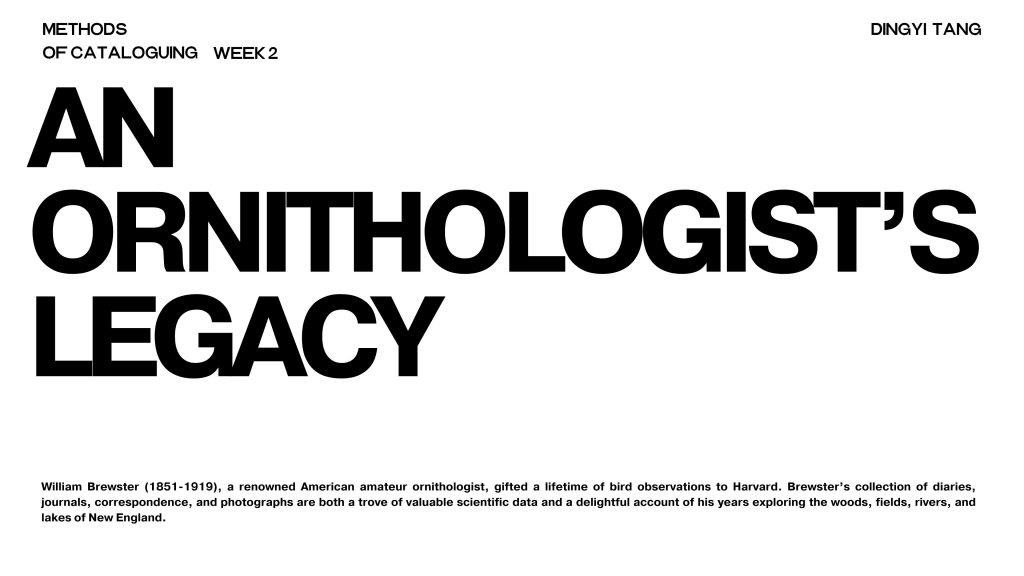
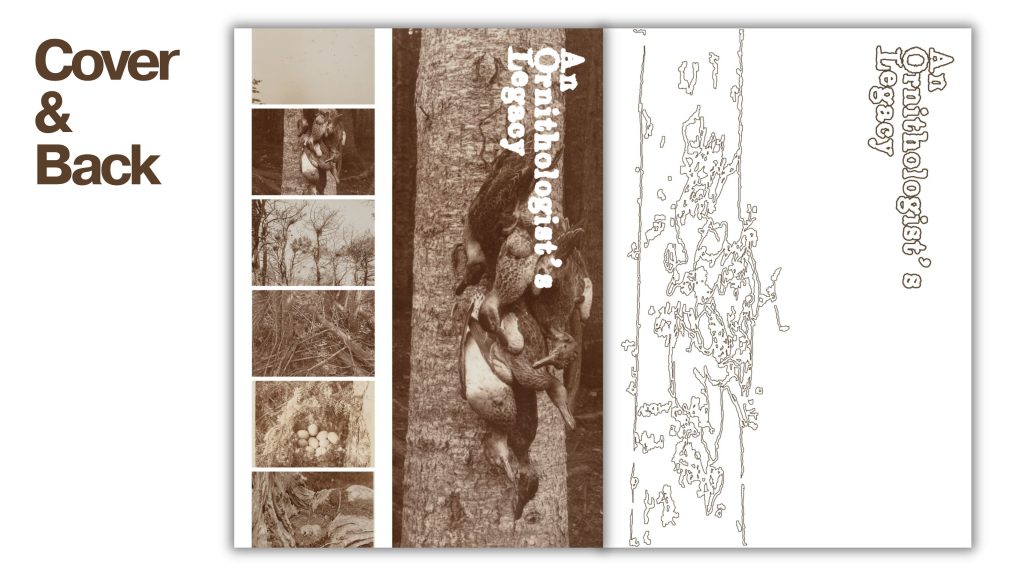
In order to present William’s record more logically and narratively,I design an archive.
A publication allows a slower reading,just like walking through memory.
I’m not creating a scientific archive book. What I’m aiming to do is to tell a story about observation.
Not just showing what Brewster saw, but reconstructing how he remembered seeing.
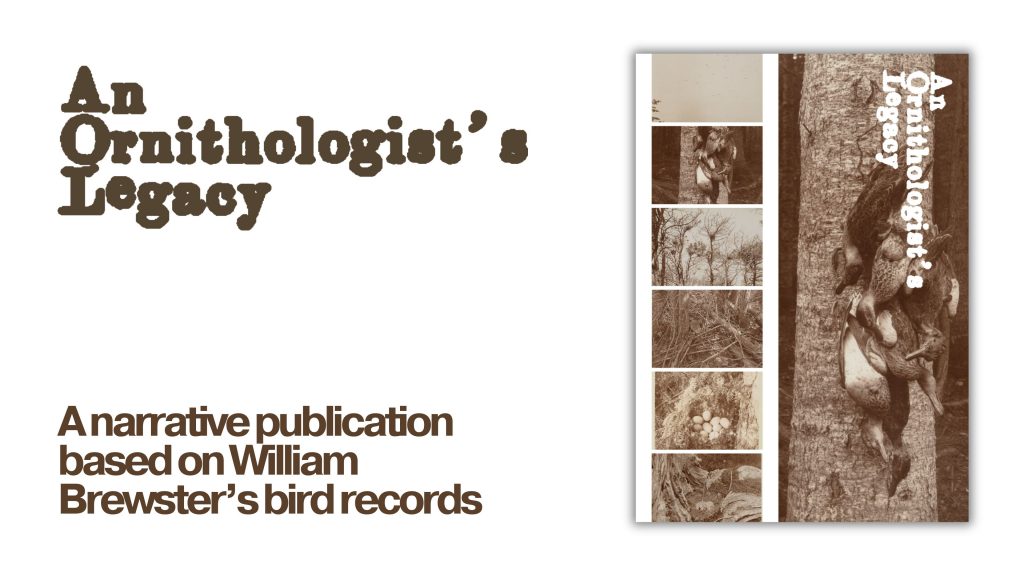
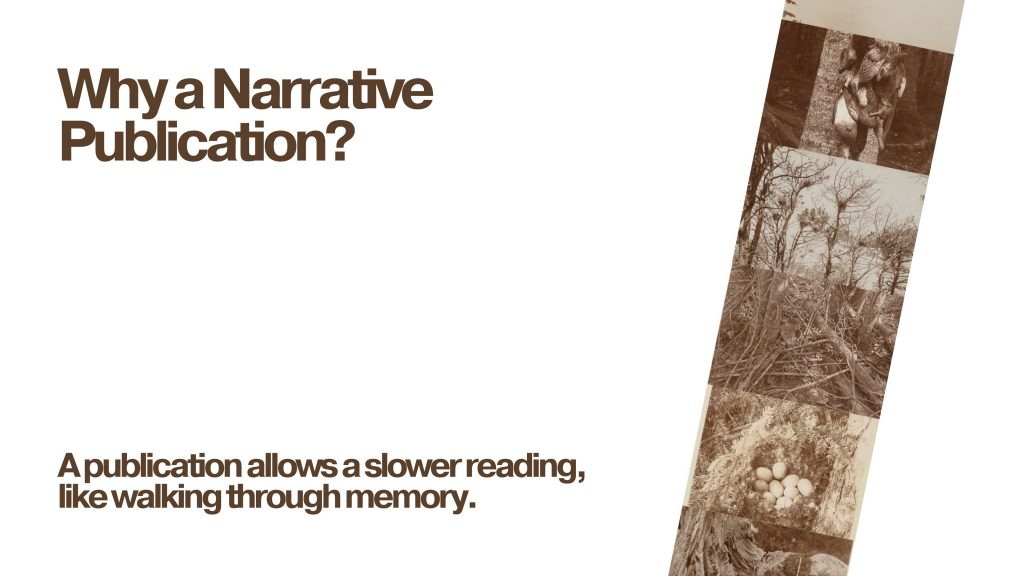
In fact, when searching for information in the Harvard archives, apart from the films he shot, I also found a large number of his diaries. This indicates that he himself was also someone who enjoyed keeping records.
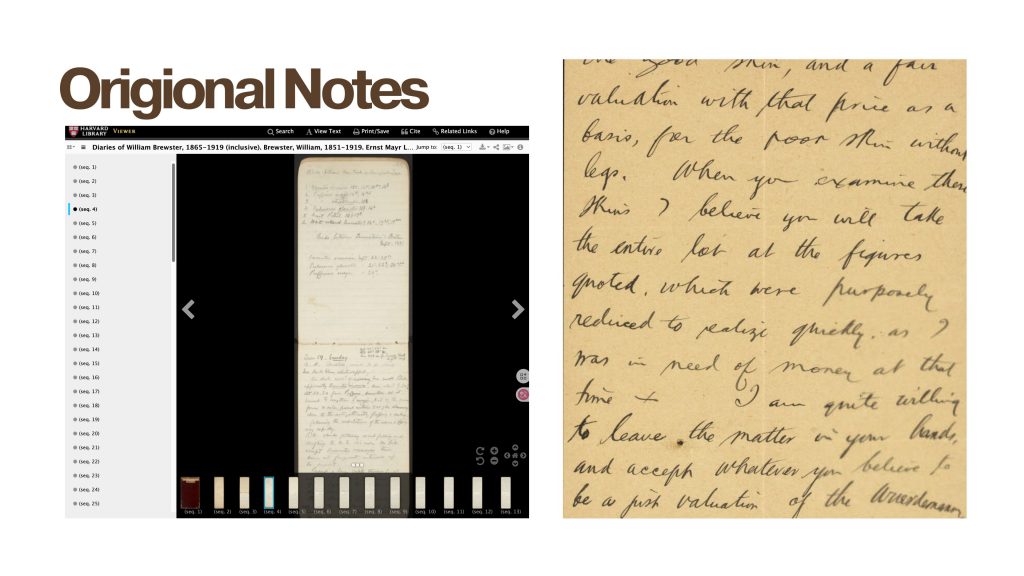
This book comprises five chapters, structured according to the timeline of the birds and William himself.
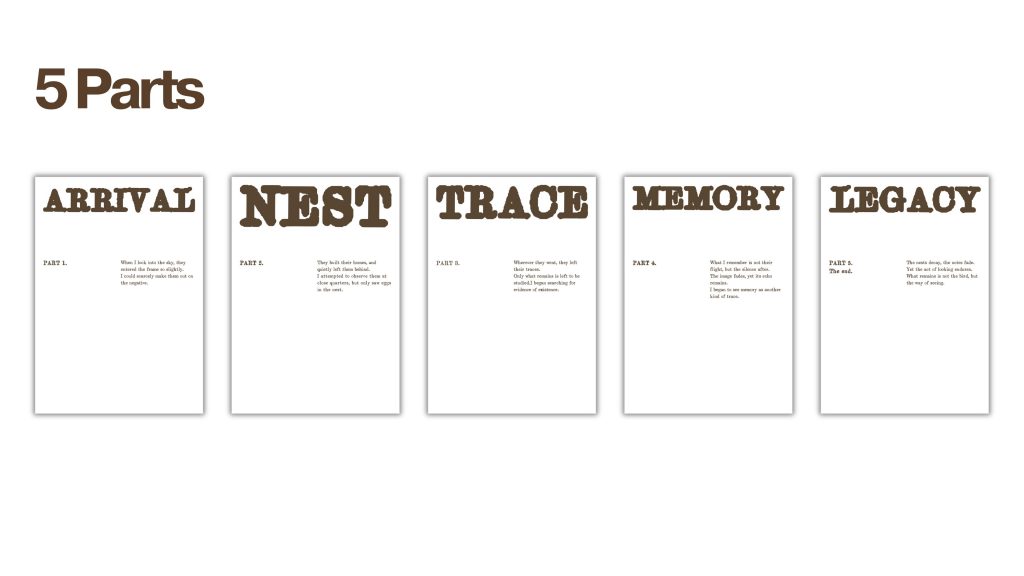
Part 1 ARRIVAL
When I look into the sky, they entered the frame so slightly.
I could scarcely make them out on the negative.
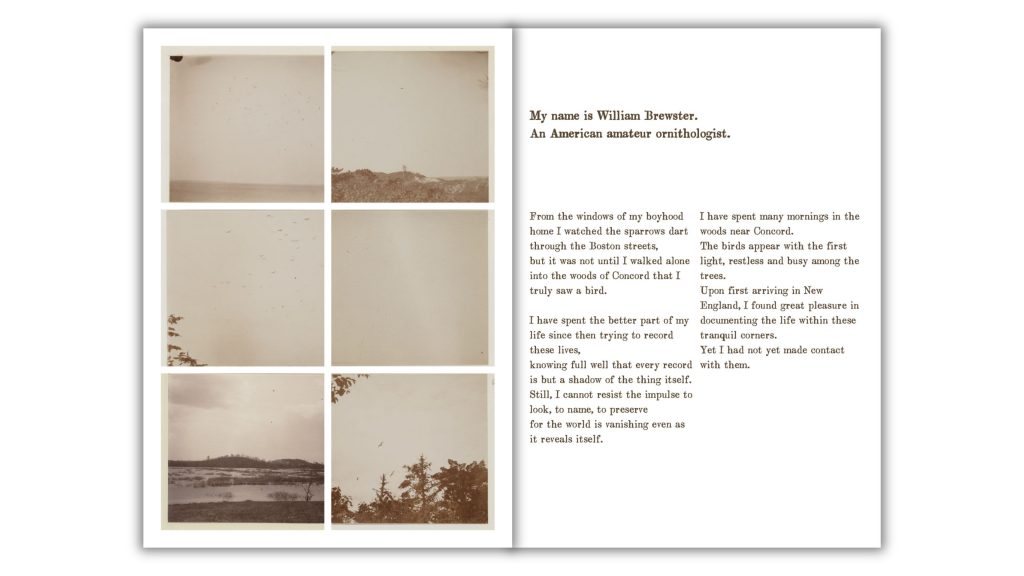
The first part is “arrival”. Here, an opening statement is also provided. This is an archive told from the first-person perspective. The “arrival” here does not merely refer to the arrival of birds, but also indicates that William began his work of observing birds around 1890. I think there is a very peculiar connection among them.
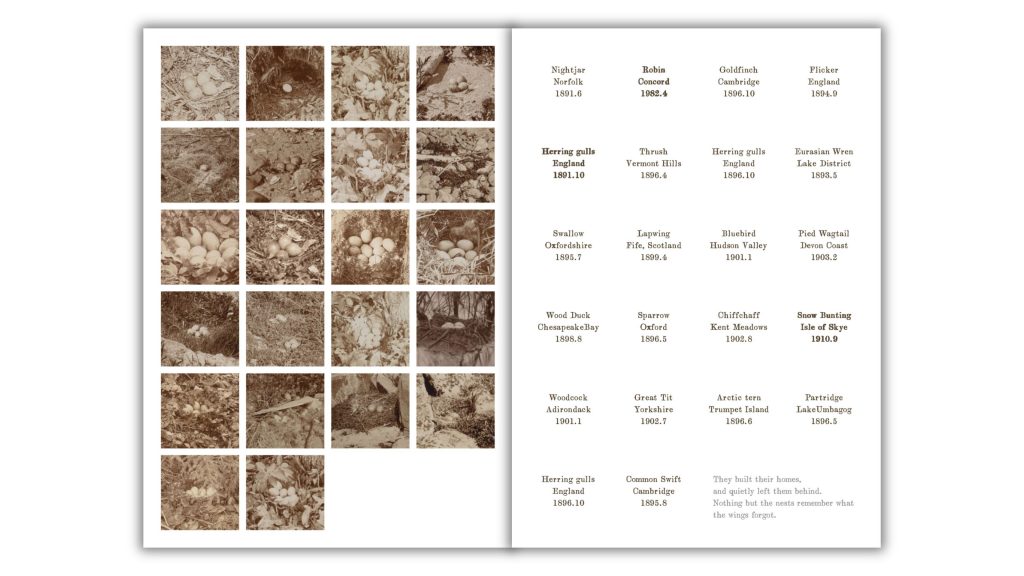
After that, I found some early photos of birds taken by William, along with their names and descriptions.
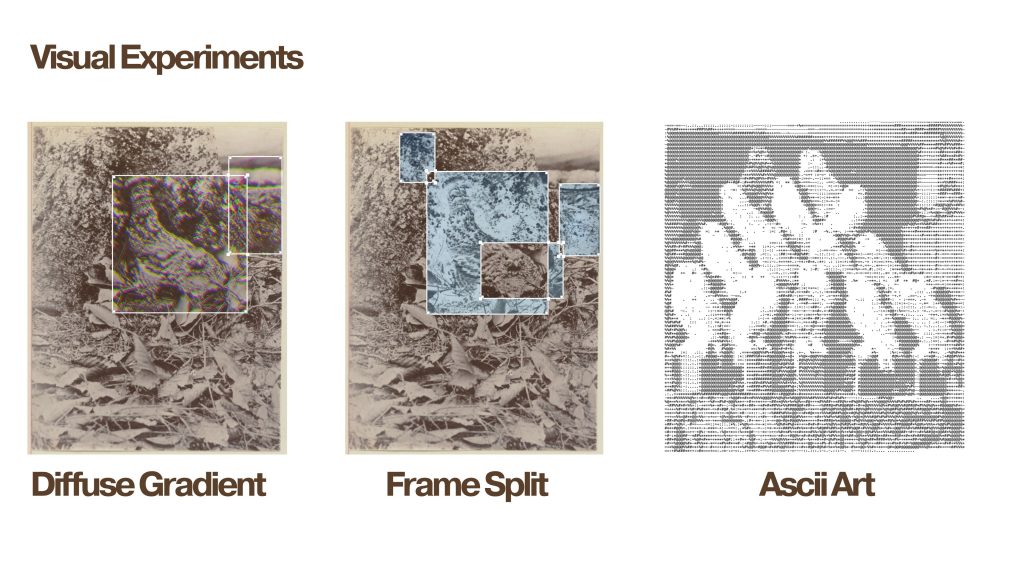
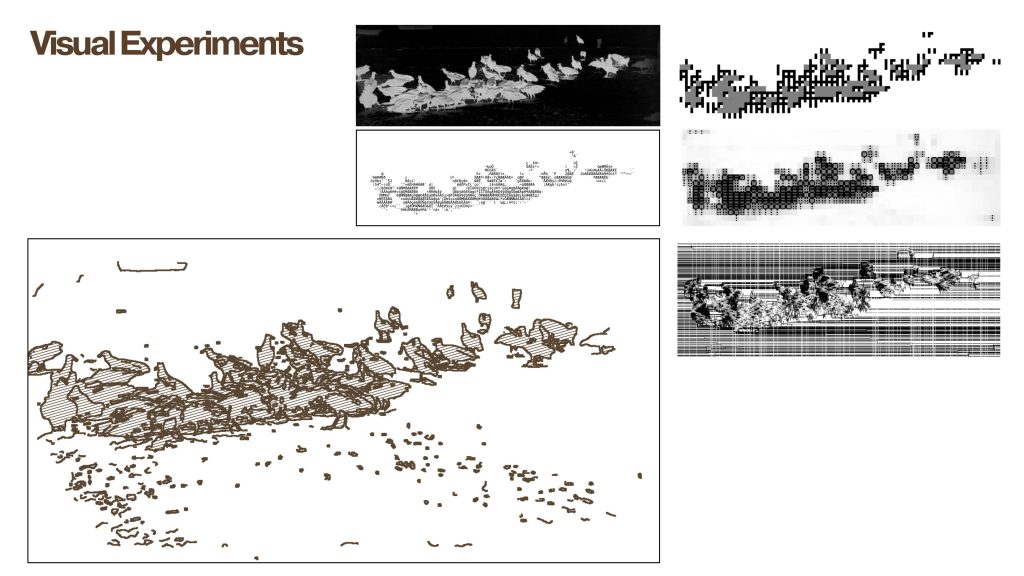
Here are some of the visual experiments I conducted. I wanted to select the birds out so that they would be easier to observe.
An interesting point is that you can observe that in the initial observations, he was always very far away from the birds.birds are very small and fuzzy.
Part 2 NEST
They built their homes, and quietly left them behind.
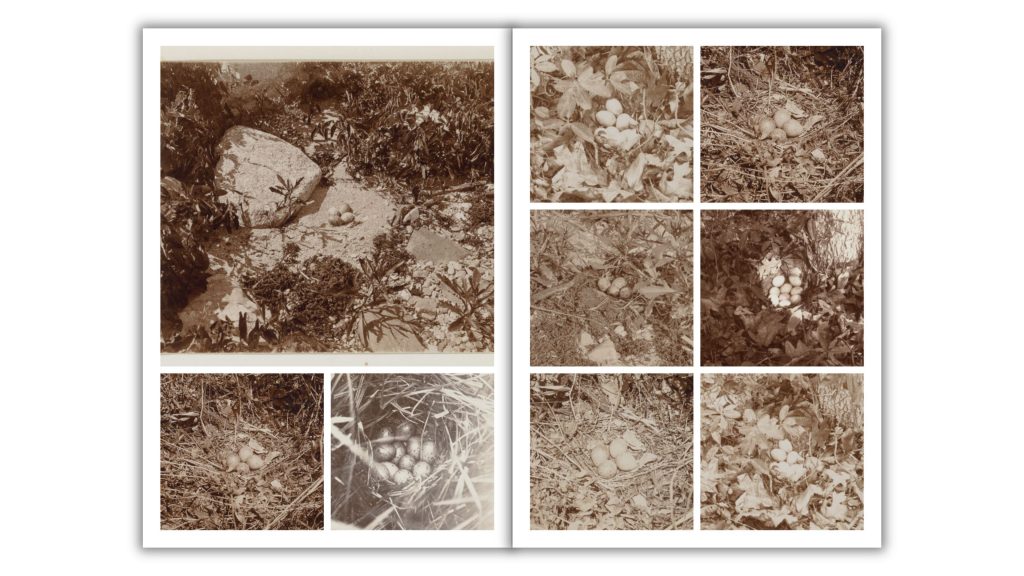
I attempted to observe them at close quarters, but only saw eggs in the nest.
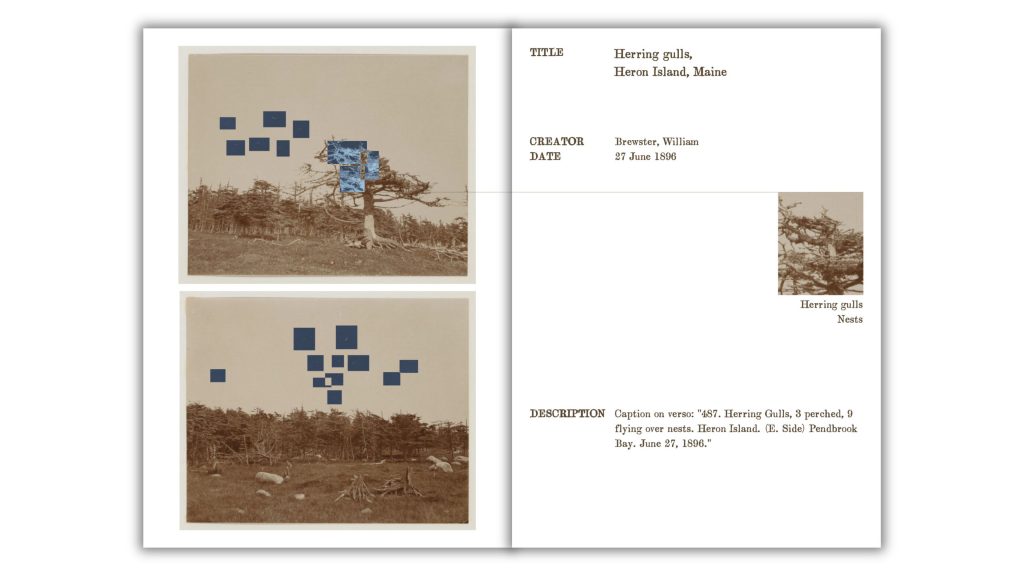
The bird’s nest might be the type of observation object that William spent the most time on.I have included the most bird’s nest photos here, along with the corresponding dates and locations.
One interesting aspect is that from this point on, the birds themselves rarely appear in their photos. This is completely different from what I imagined about a bird expert.
Part 3 TRACE
Wherever they went, they left their traces.
Only what remains is left to be studied.I began searching for evidence of existence.
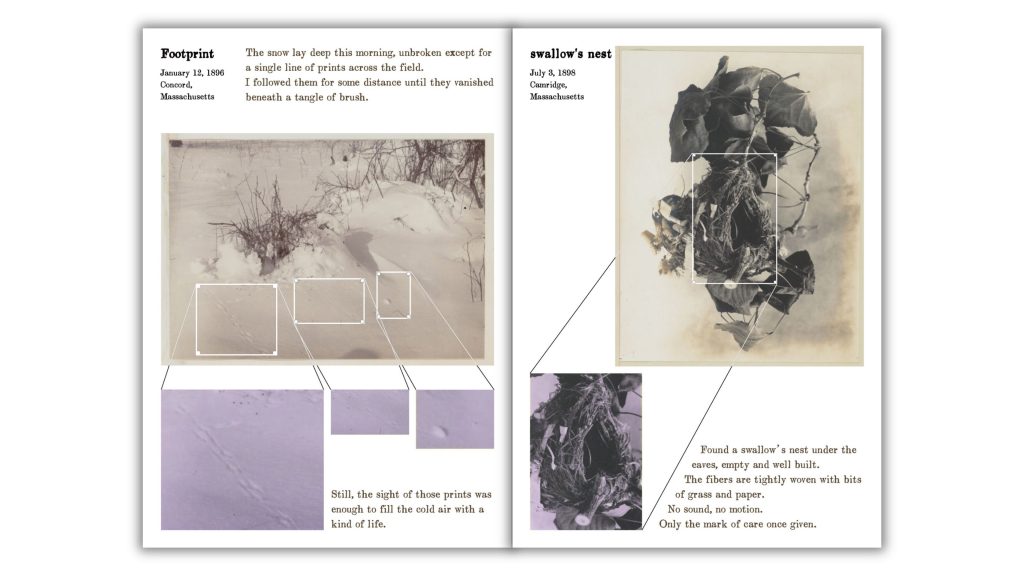
Obviously, when the birds leave, they leave behind quite a few traces.Brewster’s photographs often show not birds, but traces -empty nests, footprints, tree holes.
This was a turning point. William began to search for “evidence of existence” in the absent world. He shifted from observing nature to conceptual observation.
Part 4 MEMORY
What I remember is not their flight, but the silence after.
The image fades, yet its echo remains.
The records show that when William was organizing the materials and donating them to the Harvard Library, it had been 50 years since his first observation of birds.
So in this section, I have presented the process of William’s memory loss. But I believe there are still many scenes that he will never forget.I began to see memory as another kind of trace.
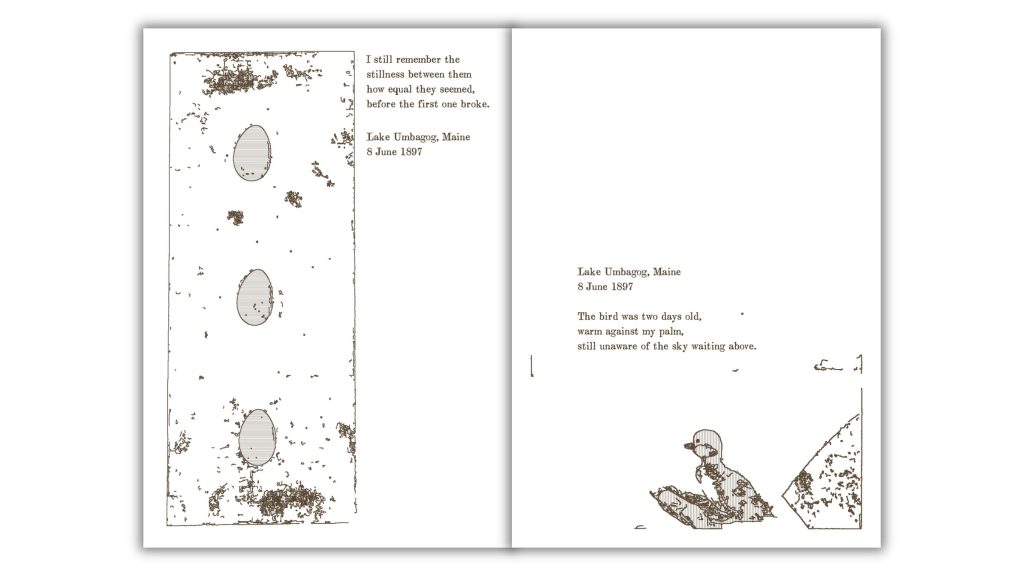
This is the second part of my visual experiment. I aim to create the effect of fading and blurring memories.
Part 5 LEGACY
This is actually just a summary.
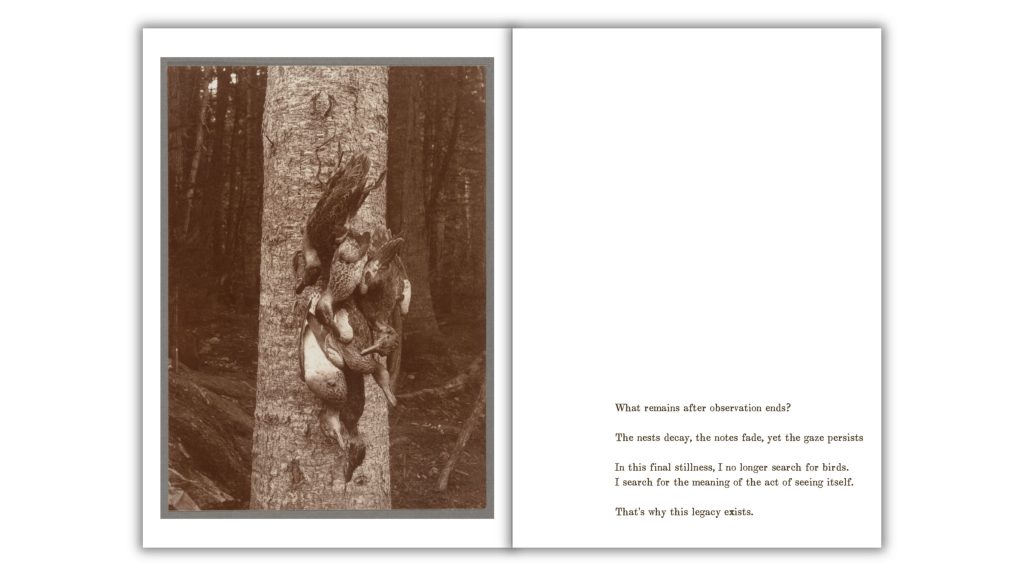
What remains after observation ends?
The nests decay, the notes fade, yet the gaze persists
In this final stillness, I no longer search for birds.I search for the meaning of the act of seeing itself.
That’s why this legacy exists.
Leave a Reply